Top AI tools to look out for in 2026
Charles Allotey •4 February 26
AI tools for developers hit a turning point somewhere in 2025. What started as autocomplete on steroids evolved into systems that could read entire codebases, write tests, review pull requests, and occasionally make questionable architectural decisions. Yeah they were questionable 😅. Now in 2026, the tools that matter aren't trying to replace you—they're trying to handle the parts of development that burn time without adding value.
This isn't about listing every AI tool with a slick landing page.
This article is my opinionated list of some the tools I think are worth a try this year and how they can help your overall development workflow. Let’s jump in
Google Antigravity - The Agent-First IDE
Antigravity launched in late 2025 and immediately split the developer community. Some people think it's the future. Others think it's trying too hard to be clever. Both groups keep using it.
It's built on a fork of VS Code but completely rethinks how you interact with an IDE. Instead of you writing code while AI suggests completions, you describe what needs to happen and autonomous agents handle the implementation.
Over a few months they’ve shipped some very cool features I believe makes it a gamechanger
Two Ways to Work
Editor View - This looks and feels like VS Code with better AI. Tab completions, inline suggestions, the usual workflow. You're still writing code, just faster.
Manager View - This is where things get different. You spawn multiple agents, each working on separate tasks in parallel. One agent scaffolds your API routes while another writes tests. You're not coding anymore—you're orchestrating.
The workflow is built around artifacts instead of raw code. When an agent completes work, it generates a task list, implementation plan, screenshots, or browser recordings. You review these artifacts and provide feedback without stopping the agent's execution.
What It's Actually Good For
Antigravity excels at greenfield projects. Need a full-stack app with auth, database, and API? Describe it, and agents build a working prototype in hours instead of days. The 76.2% score on SWE-bench Verified (a benchmark measuring AI's ability to resolve real GitHub issues) shows it can handle production codebases, not just toy examples.
Where it struggles: legacy codebases with decades of tribal knowledge, complex monoliths where context matters more than code, and projects where you need surgical precision over speed.
The Models
Antigravity runs on Gemini 3 Pro by default (Google's latest), but also supports Claude Sonnet 4.5 and Claude Opus 4.5. Free in public preview for individuals, though compute costs for Gemini 3 suggest a tiered pricing model is coming.
Some developers report the agents occasionally delete "redundant" code that wasn't actually redundant, or get stuck in logic loops. Google shipped a patch (v2.1.4) to address these issues, but the jury's still out on whether agent-first development is ready for mission-critical work.
Code Review Tools - Because AI Writes Fast But Humans Still Have to Verify
AI tools now generate 41% of committed code according to Stack Overflow's 2025 survey. That's a lot of code moving through pull requests. The problem: review capacity hasn't scaled to match.
Qodo (formerly CodiumAI)
Qodo focuses on the entire software development life cycle, not just code generation. Three specialized agents handle different parts of the workflow:
Qodo Gen generates code and tests with context from your entire codebase. Qodo Cover improves test coverage by finding gaps in your test suite. Qodo Merge handles PR summaries, risk analysis, and automated code review.
What makes it different: it's SOC 2 compliant and supports on-prem, SaaS, and air-gapped deployments. Enterprises actually use this in production. The code review happens in your IDE, GitHub, or CI pipeline—wherever you need it.
Teams report 40-60% reduction in review time while catching more issues. The AI flags security vulnerabilities, performance problems, and maintainability issues that tired human reviewers miss at 5 PM on Friday.
CodeRabbit
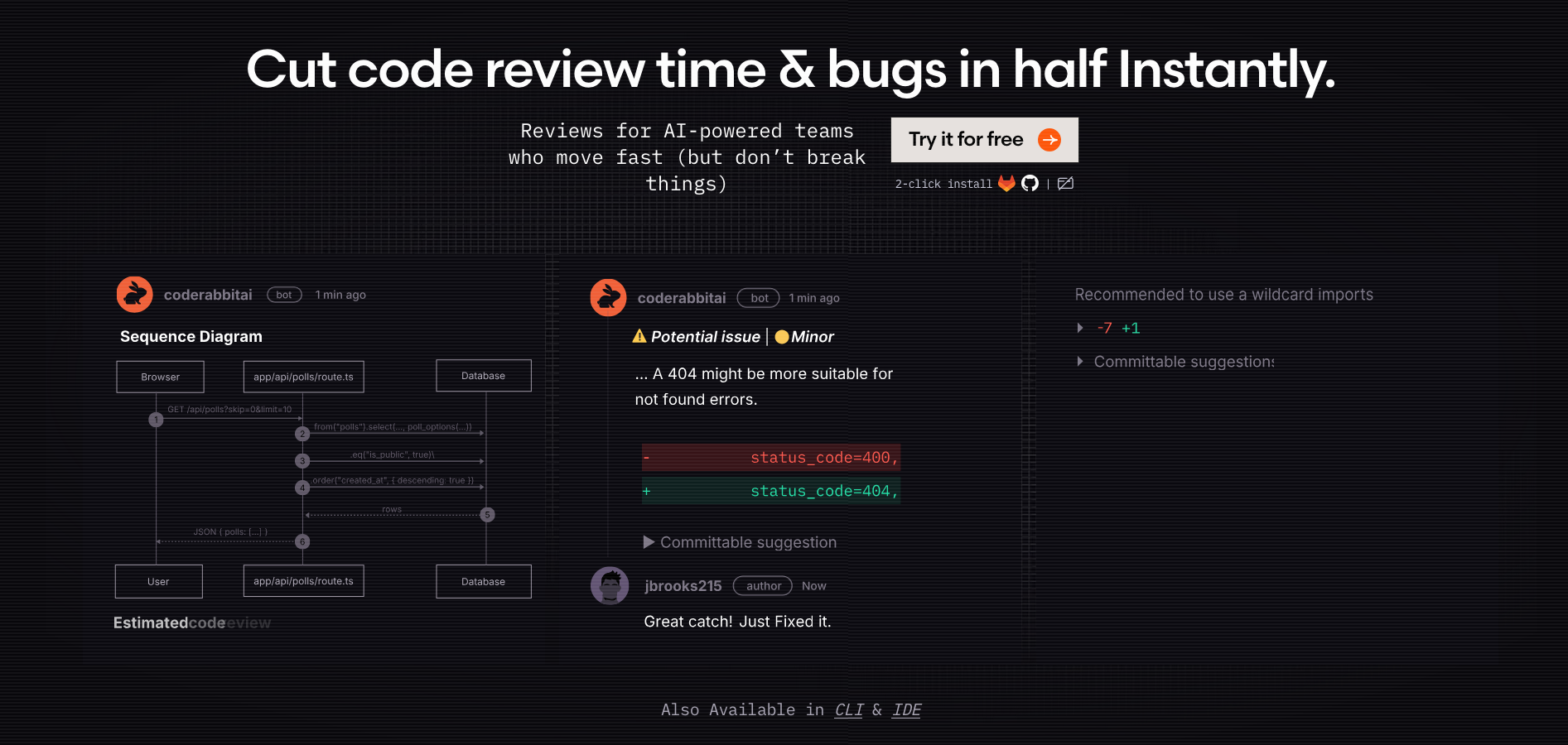
CodeRabbit analyzes pull requests and generates structured feedback covering readability, maintainability, security, and potential bugs. It achieves 46% accuracy in detecting runtime bugs through multi-layered analysis.
The interface is clean. Comments appear inline with explanations and suggested fixes. Click a violation, jump to the code. No scrolling through walls of text.
It integrates directly with GitHub, understands your team's coding standards, and learns from accepted feedback over time. Free tier for open source, paid plans for private repos.
Sourcery
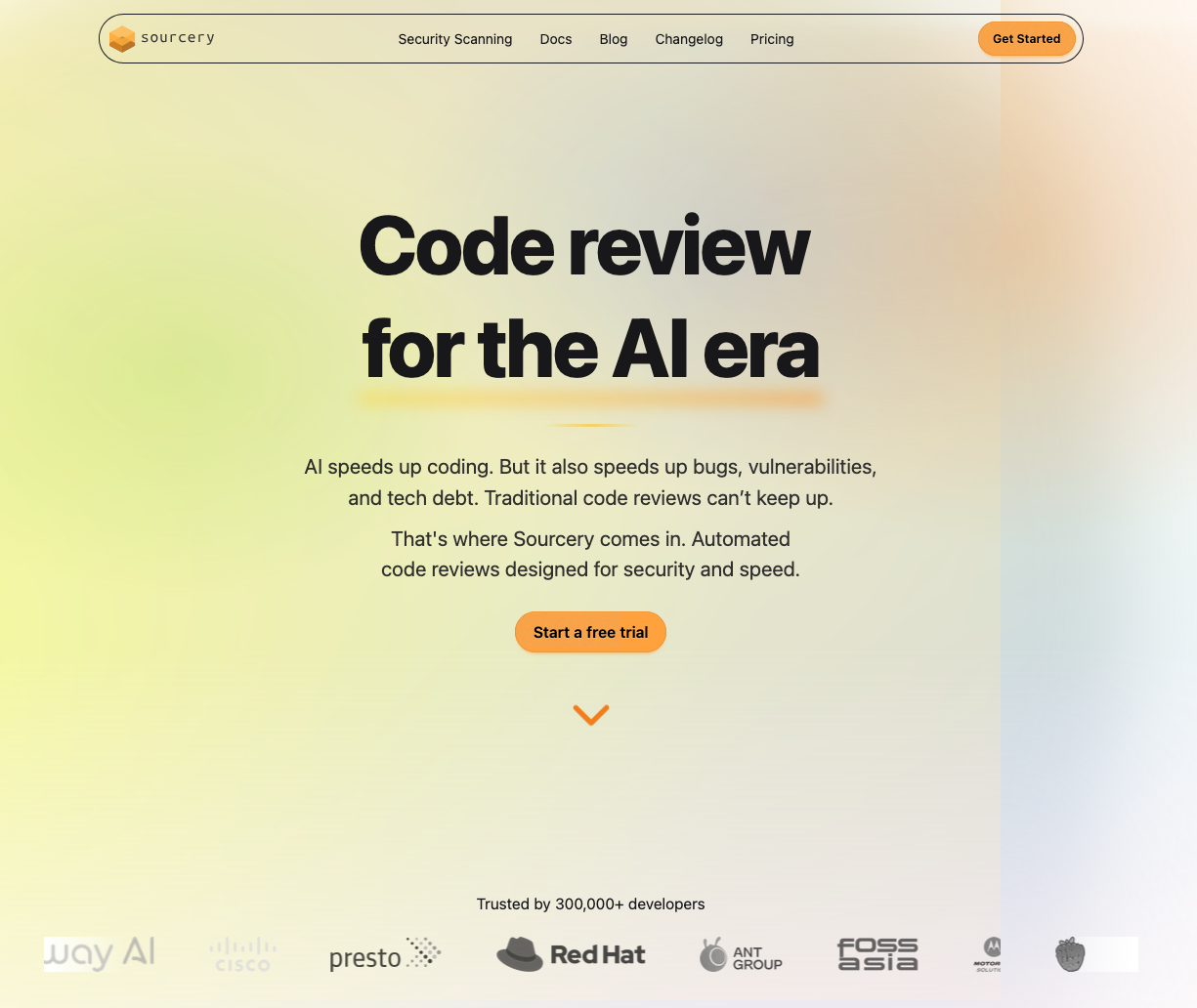
Sourcery specializes in suggesting improvements that experienced developers would make. It's less about finding bugs and more about teaching junior developers better patterns.
The refactoring suggestions are context-aware. It understands when to recommend list comprehensions in Python, when to extract functions, and when to simplify complex conditionals. Acts as a mentor that never gets tired of explaining the same concepts.
Documentation Tools - Because Nobody Reads Outdated Docs
Documentation typically falls into two categories: meticulously maintained or completely wrong. AI tools are trying to fix this by generating and updating docs automatically.
Mintlify
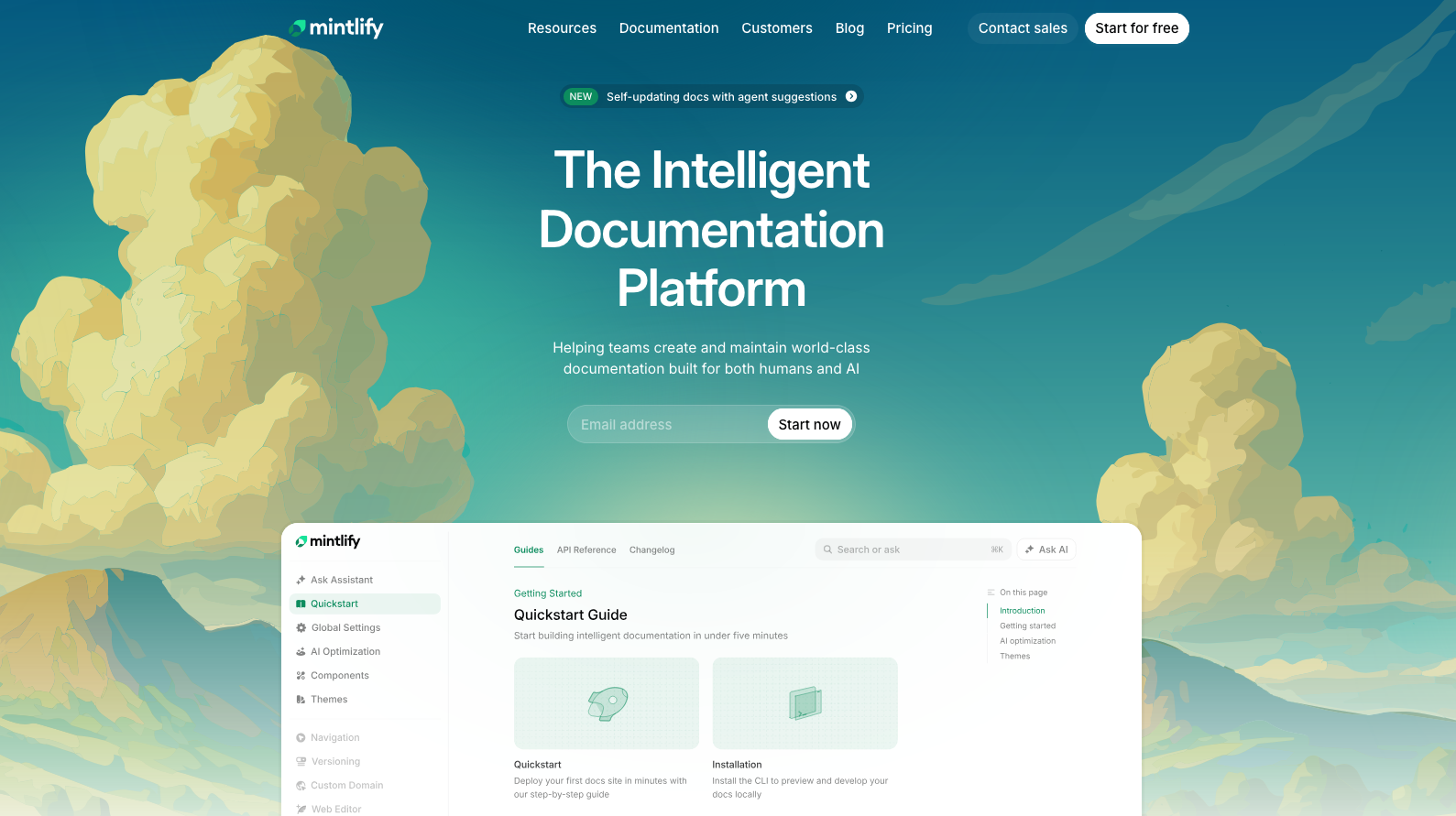
Mintlify has become the default for dev tool companies. It auto-generates documentation from your codebase, keeps it synced with code changes, and makes it look good without much effort.
The workflow: connect your GitHub repo, Mintlify scans your code and generates structured docs. When you push changes, docs update automatically. It supports Markdown, integrates with Git, and uses AI to write explanations from code comments.
What sets it apart: the docs are actually AI-readable. LLMs crawl, quote, and summarize docs in tools like Cursor, ChatGPT, and Claude. If your docs aren't structured for AI consumption, developers using these tools won't find them.
Recent additions include an AI assistant that understands context and delivers what users need, MCP support for AI workflows, and a context-aware agent for drafting and maintaining content.
Theneo
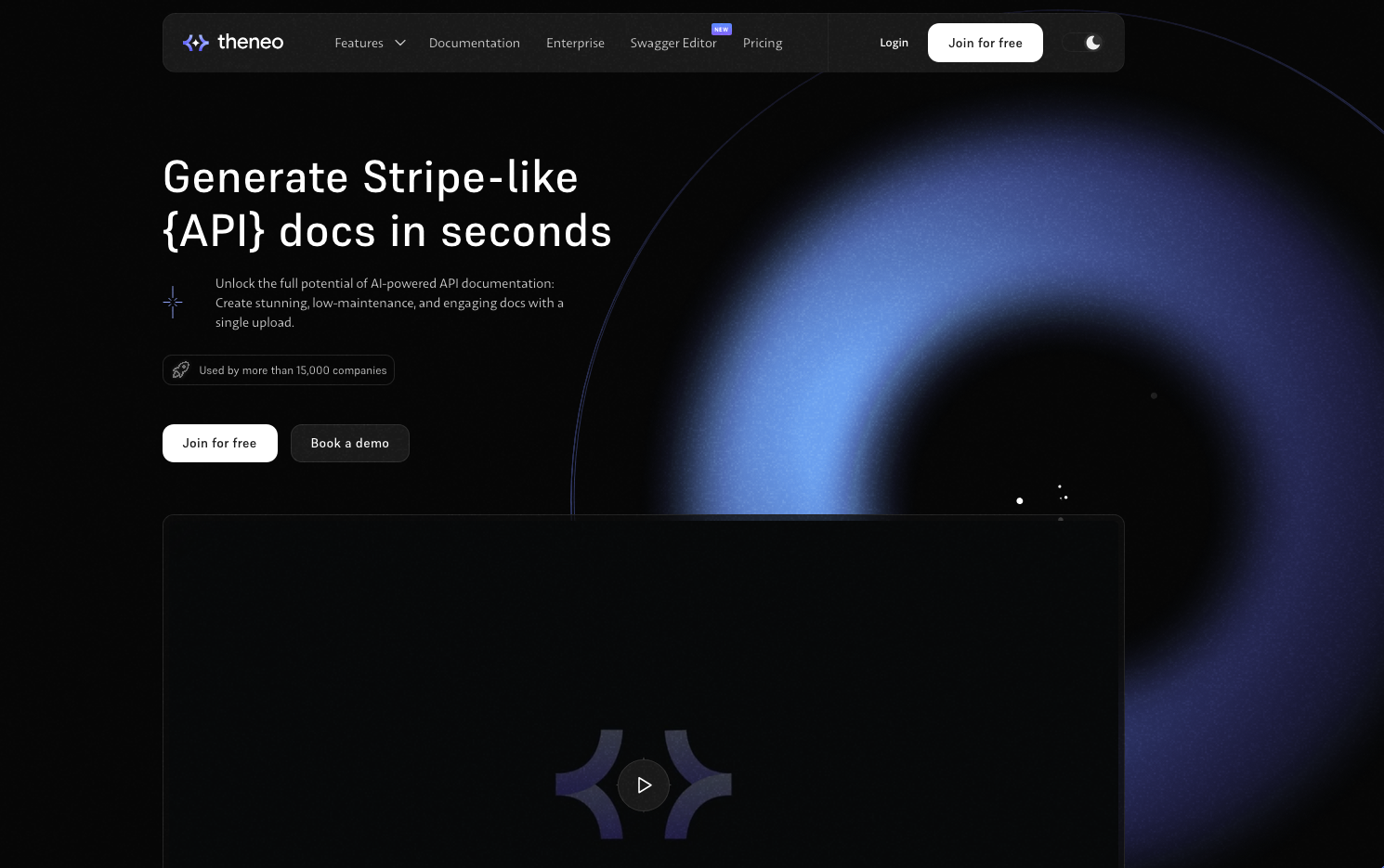
Theneo turns OpenAPI specs and Postman collections into customer-facing API documentation. Import your spec, Theneo organizes endpoints into logical sections, adds readable summaries and example requests, makes it interactive.
Developers can test API calls directly from the docs. No copying curl commands into terminals. The documentation site stays automatically synced with your API spec, reducing the "docs are wrong" support tickets.
Best for: external-facing APIs where documentation quality affects adoption. If customers evaluate your API based on docs, Theneo makes you look professional.
DocuWriter.ai
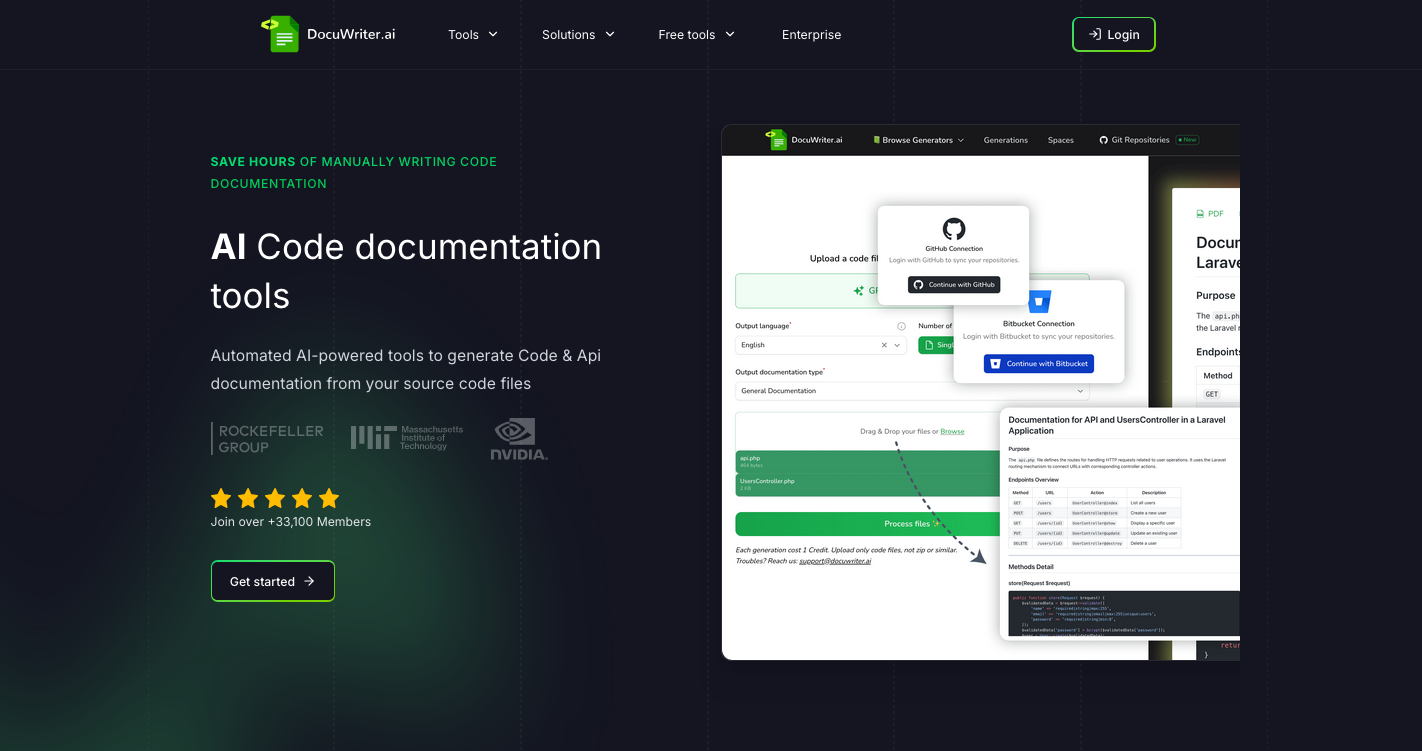
DocuWriter generates documentation directly from code and comments. It's less about polished marketing sites and more about keeping internal docs accurate.
The AI reads your code structure, extracts meaningful patterns, generates explanations and examples. When SDKs drift from actual behavior, DocuWriter helps catch it by documenting what the code actually does, not what you think it does.
Automation Tools - Stop Doing the Same Thing Twice
Automation has existed forever. AI automation is different because it can handle edge cases you didn't anticipate and make decisions based on context, not just predefined rules.
n8n
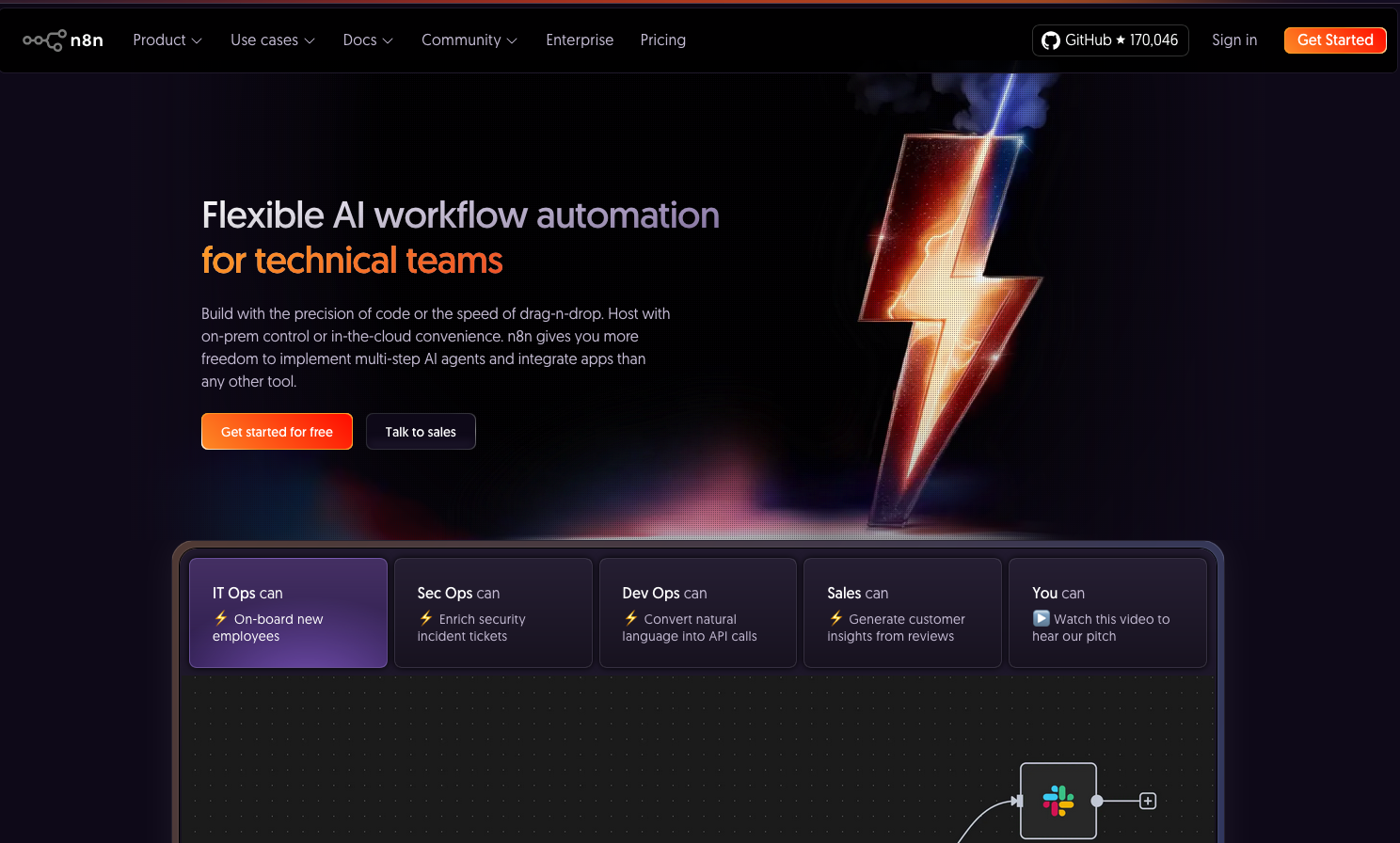
n8n is open-source workflow automation with native AI capabilities. It's code-first but provides a visual workflow builder. You can self-host for data privacy or use their cloud service.
Recent updates integrate AI nodes directly—OpenAI, Claude, local models. You can build workflows that read data, pass it to an LLM for analysis, take action based on the response, all visually.
Common uses: syncing CRM data, automating employee onboarding, triggering CI/CD notifications, processing webhooks, transforming data between systems. Technical teams pick n8n when they need something more flexible than Zapier but don't want to maintain custom scripts.
Pipedream
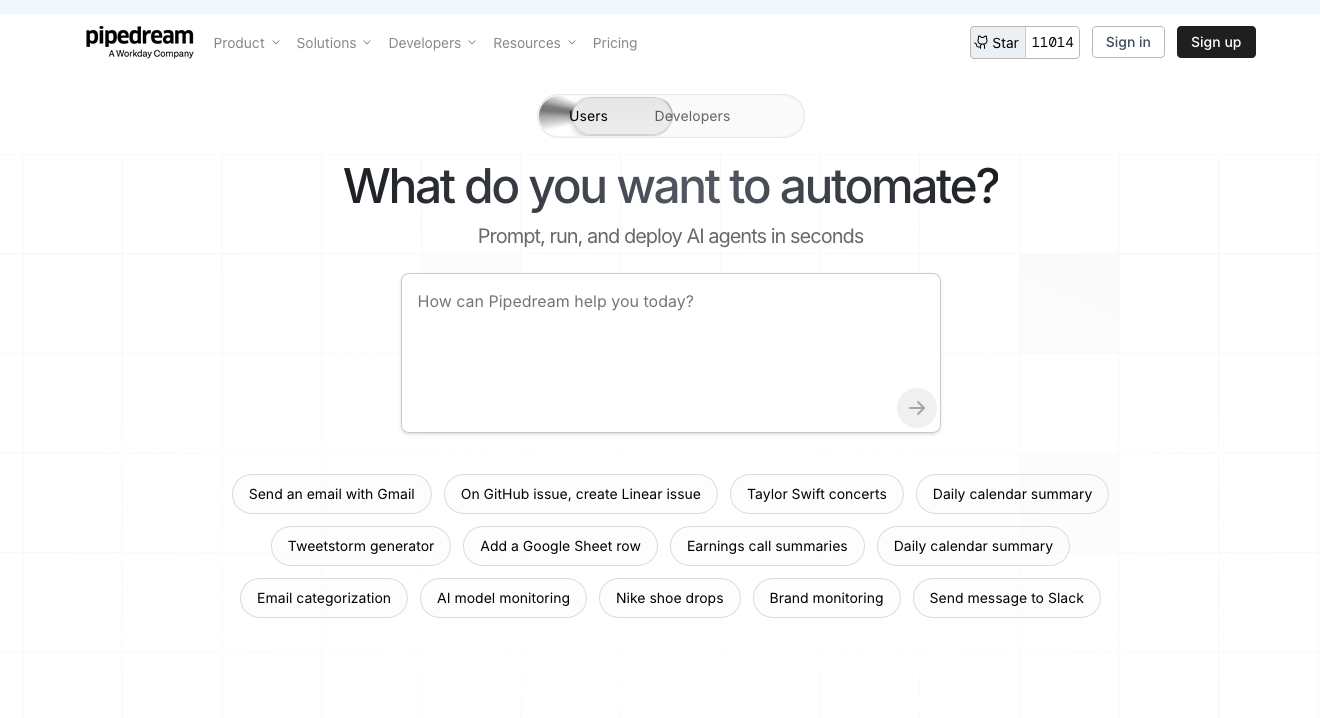
Pipedream is event-driven automation for developers. It runs on serverless infrastructure and supports custom code in JavaScript, Python, Go, and Bash.
Workflows trigger on webhooks, API calls, database changes, or scheduled jobs. Each step can run custom logic, making it useful for complex integrations. The 2,700+ built-in integrations reduce boilerplate.
Best for: developers building AI agents with extensive API integrations, teams that need real-time automation, anyone comfortable with code who wants infrastructure handled for them.
Windmill
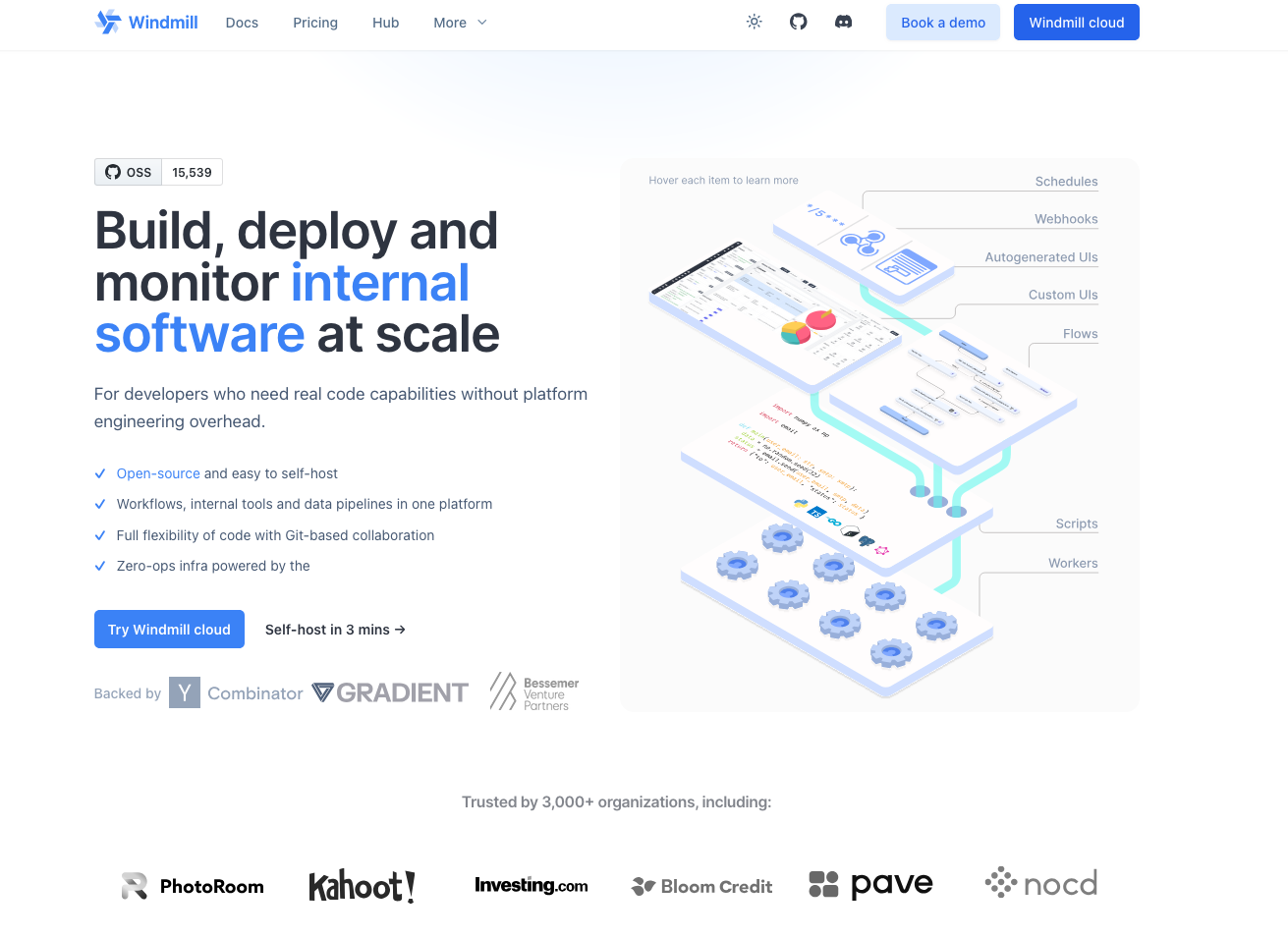
Windmill treats workflows as code. It's fully open-source, can be self-hosted in about 3 minutes via Docker or Kubernetes, and gives you complete control over your automation logic.
The platform is lightweight and fast. Write workflows in Python, TypeScript, Go, or Bash. Everything is versioned in Git. CI/CD integration is straightforward.
Used by 3,000+ organizations as of early 2026. Appeals to teams with strong developer talent who want the openness of open-source without sacrificing functionality.
Prototyping and MVP Tools - From Idea to Deployed App
Sometimes you need to go from zero to working prototype fast. These tools specialize in that workflow.
Replit Agent
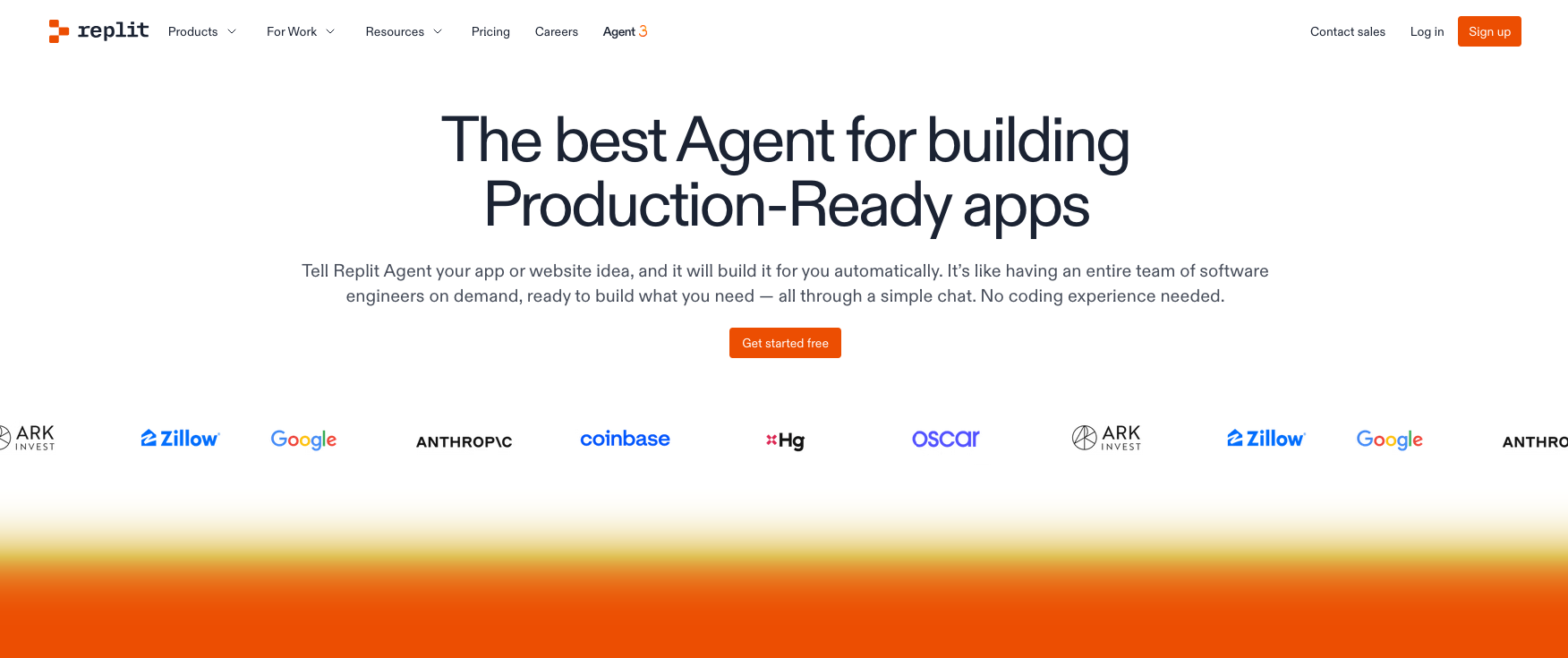
Replit evolved from a browser IDE into a full AI development platform. Agent 3 can build complete applications—frontend, backend, database, auth—from natural language descriptions.
The workflow: describe your app, Agent generates a plan, you approve, and it builds. While building, it periodically tests using a browser, generates reports, and fixes issues automatically. This reflection loop means fewer broken features when you review the output.
The testing system is 3x faster and 10x more cost-effective than Computer Use models. Agent can also build other agents and create workflows, letting you automate complex tasks through natural language.
Where it shines: greenfield projects, MVPs, rapid prototyping. One developer reported cloning LinkedIn with a single prompt and getting a surprisingly functional prototype. The generated code is more complete than most AI builders—all main functionality works, no broken buttons or dead links.
The downside: it's slower than competitors. What takes Lovable 2 minutes might take Replit 30-40 minutes. The thoroughness trades speed for completeness.
Lovable
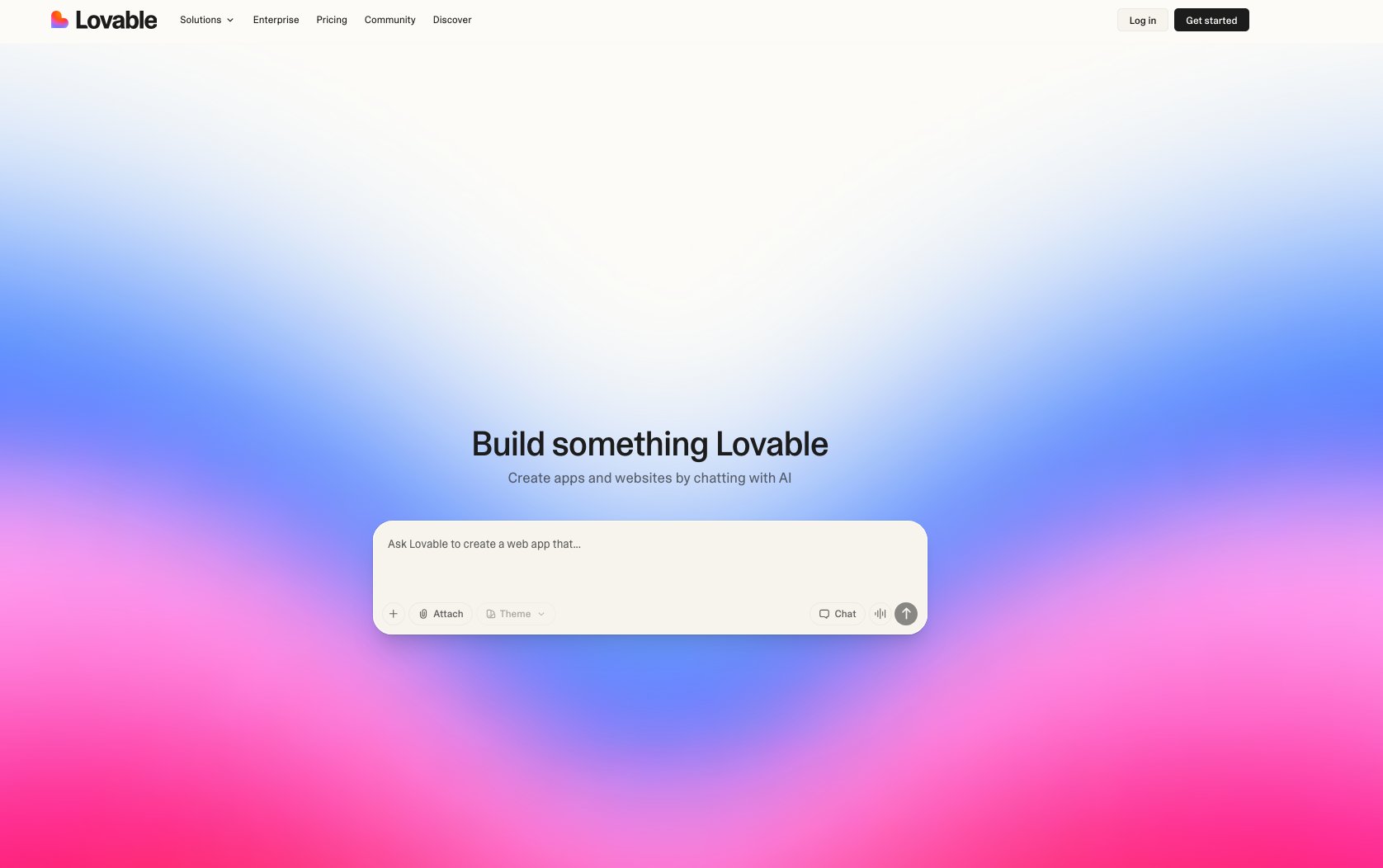
Lovable takes a design-first approach. It generates production-ready web applications focused on React, Tailwind, and Vite. The platform reached 500,000 users and $17M ARR by making one thing really well: turning descriptions into working frontends.
Import Figma designs or describe what you need. Lovable generates the complete application—frontend, backend (Supabase), database logic. The visual editor lets you fine-tune designs without consuming credits. Changes are instant.
What makes it different: the code it generates is actually yours. Full GitHub integration, automatic syncing, complete ownership. No vendor lock-in. Built-in authentication, hosting, and database are ready to go.
Best for: web apps where design quality matters. Portfolio sites, SaaS landing pages, customer-facing business apps. Less suitable for complex backend logic or enterprise systems.
Amp by Sourcegraph
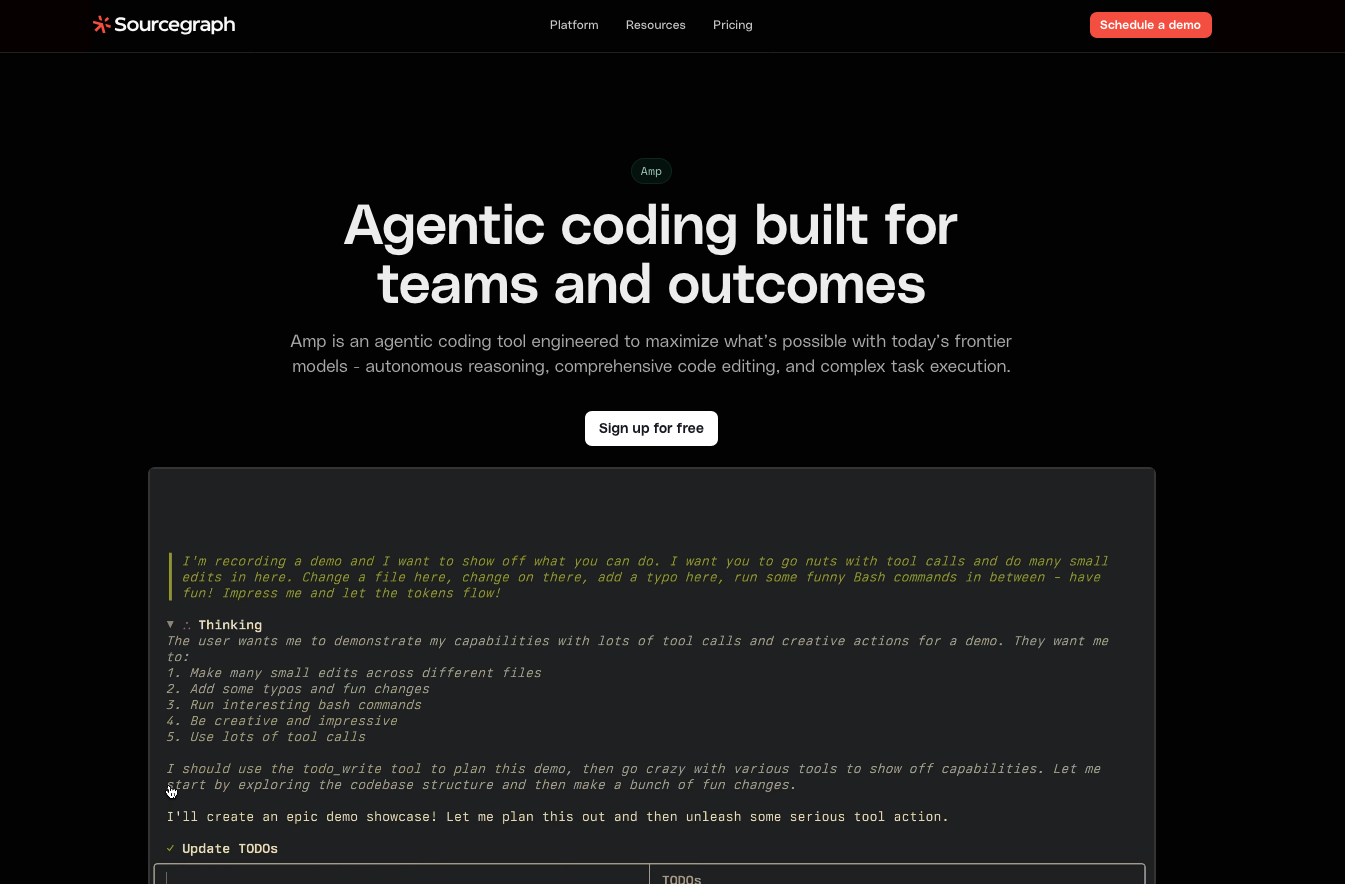
Amp is the coding agent that developers keep coming back to. It combines multiple frontier models—Claude Opus 4.5, Gemini 3 Pro, GPT-5.2—and intelligently selects which one fits each task.
Available as a CLI or VS Code extension. It integrates into your existing workflow instead of forcing you into a new IDE. The agentic approach means you can let it run on complex refactors while you work on something else.
Two modes: Smart (unconstrained, uses state-of-the-art models) and Rush (fast and efficient for narrowly-defined tasks using Claude Haiku 4.5). New users get $10 daily credits for free.
What developers like: it's consistently better at complex tasks than other agents. One developer noted it "feels way more agentic"—you can spawn subagents that work in parallel, each handling different parts of a problem. The context management is excellent, understanding entire codebases instead of just current files.
Thread sharing is built-in, so teams can reuse successful workflows. PRs with Amp threads attached make code review easier because context is preserved.
Recently spun out from Sourcegraph as an independent company (Amp Inc.) to focus on frontier exploration. The product moves fast—new features ship constantly.
Best for: complex refactoring, multi-file changes, teams that want shared context and reproducible workflows.
When to Use What
Antigravity: Greenfield projects, MVPs, rapid prototyping. Not for critical production systems with complex legacy constraints.
Replit/Lovable/Amp: MVP prototyping, but pick based on your priorities. Replit for thoroughness and built-in testing. Lovable for design-first web apps with quick iteration. Amp for complex refactoring in existing codebases.
Qodo/CodeRabbit: Every project. Code review automation catches issues before they become production fires. The ROI is obvious.
Mintlify/Theneo: Public-facing products, developer tools, any API where documentation affects adoption. Also useful for internal docs that AI assistants need to reference.
n8n/Pipedream: Any time you're doing the same task manually more than twice. If you can describe the workflow, you can automate it.
What's Actually Changing
The shift isn't about AI writing all your code. It's about AI handling the mechanical parts so you can focus on architecture, business logic, and decisions that require judgment.
Good developers in 2026 know how to prompt AI effectively, review AI-generated code quickly, spot when AI is confidently wrong, and understand when to override suggestions.
The tools that survive are the ones that integrate into existing workflows without forcing you to change how you work. They save time, catch real bugs, and produce output you'd actually merge.
Try one tool from each category. See what sticks. The goal isn't to use every AI tool—it's to use the ones that make you faster without creating technical debt.
What to Watch
I found something cool recently called Agent Skills. Skills are modular, self-contained packages that extend Claude's capabilities by providing specialized knowledge, workflows, and tools. Think of them as "onboarding guides" for specific domains or tasks—they transform Claude from a general-purpose agent into a specialized agent equipped with procedural knowledge that no model can fully possess. Pretty cool and one to watch.
Agentic workflows are moving from hype to production. Tools like Antigravity show what's possible when agents work in parallel on different parts of a problem.
Cost management is now a feature. As AI usage grows, developers care about token consumption, rate limits, and pricing models. Tools that provide visibility into costs win.
The developer tools landscape in 2026 isn't about replacing developers with AI. It's about giving developers AI-powered leverage to do more with less friction. The teams that figure this out first ship faster, maintain cleaner codebases, and spend less time on work that doesn't move the product forward.